

Gongfu tea: a beginner's guide to the brewing ritual
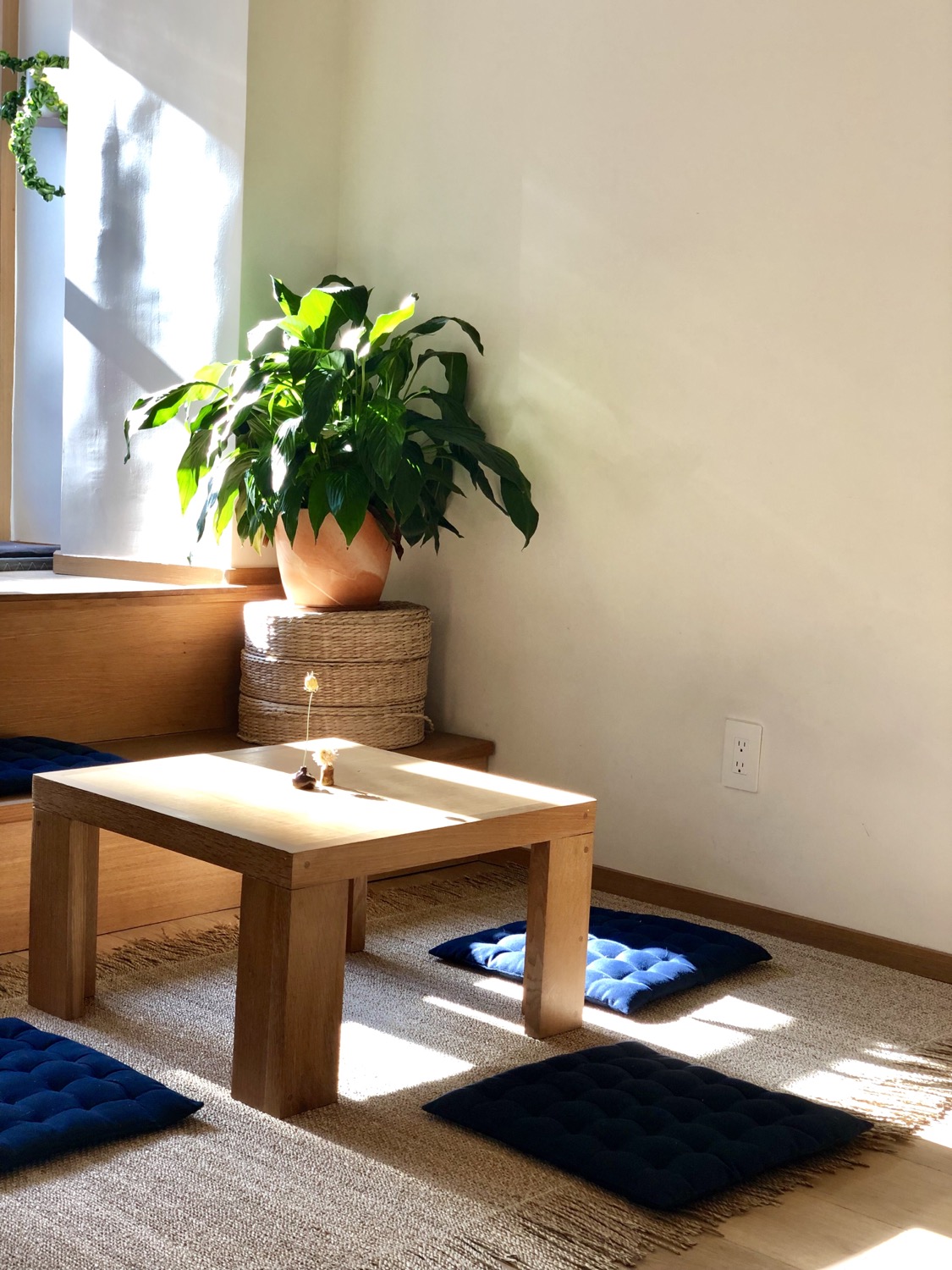

The first time a guest sits down at Floating Mountain Tea House to experience gongfu tea, they usually expect a cup of tea. Instead, a small clay pot appears, accompanied by tiny cups and a teabowl with a few grams of loose-leaf tea. Hot water is poured carefully, and then the session begins: seven, eight, ten small pours, each one tasting different from the last, the leaves slowly unfurling across the steepings like something waking up, living the full cycle of life. I've watched this moment of surprise happen many times. The guest came for a drink. They left having an experience.
That gap between expectation and experience is exactly where gongfu tea lives. Most people in the US carry an unconscious assumption about tea: that it's a beverage, something to prepare quickly and drink while doing other things. The gongfu steeping method, rooted in Chaozhou and Fujian tradition, inverts that assumption completely. It asks you to slow down, pay attention, and brew the same leaves repeatedly, each infusion revealing a different facet of what's in the cup. Speed and convenience have nothing to do with it. Skill, patience, and curiosity are the whole point.
This article is a walk through everything a beginner needs before their first real session. By the end, you won't just know how to brew this way. You'll understand why the method exists at all, and why, once you've experienced it properly, nothing else quite compares.
What "gongfu tea" actually means
The translation most people get wrong
The most people associating "gongfu" with martial arts. That's not wrong, exactly, but it misses the point. The term, written as 工夫 in this context, refers to mastery achieved through patience, repetition, and accumulated effort. Applied to tea, it translates most accurately as "tea made with skill" or "tea prepared with care." There's no performance in the name. There's just the idea that doing something well, over and over, is itself the practice.
The tradition is rooted in southeastern Chinese tea culture, particularly in Chaozhou and the Fujian region, where it developed as a regional brewing technique before becoming more widely recognized. Recognized as a separate form of the practice about 350-400 years ago by Scholars there is still a debate around its exact origins. What matters practically is that gongfu cha, this Chinese tea ceremony in its most domestic and daily form, was not designed for special occasions. It was how people in those regions brewed and drank tea in daily life, and they got very good at it.
Why the name holds the whole philosophy
Once you understand that translation, the entire method clicks into place. Gongfu brewing is not a script to follow or a ritual to perform correctly. It's a practice you develop through repetition. There is no final destination where you've "mastered" it. You simply get more attentive, more responsive to what the tea is telling you, and more capable of adjusting on the fly.
This distinction matters because many beginners approach gongfu brewing looking for the right rules. The actual skill is learning to hold those rules loosely, using them as a starting point rather than a fixed procedure. The goal is a deepening relationship with the leaf, infusion by infusion, session by session. That's the whole philosophy, contained inside two words.
How gongfu brewing differs from casual tea drinking
The Western approach and what it optimizes for
Most tea drinkers in the US use a mug, a teabag or loose-leaf infuser, and one long steep of three to five minutes. That approach isn't wrong. It's simply optimized for something different: convenience, volume, and a single consistent result. You get a reliable cup without thinking much about it. There's real value in that.
The honest comparison is this: Western-style brewing prioritizes ease and produces one uniform serving. Gongfu-style brewing prioritizes depth and produces many evolving cups from the same leaves. If you've ever wondered why a tea tasted flat or one-dimensional despite being expensive or well-sourced, there's a good chance the brewing method is what limited it.
Small vessel, more leaves, many short steeps: the core logic
Gong fu tea uses a small teapot or gaiwan (a lidded bowl, typically 90 to 150 ml), a high leaf-to-water ratio, and many brief infusions rather than a single long one. Each steep lasts only seconds at the start. The leaves open gradually across rounds, releasing different compounds at different rates, so what you taste in the first cup is genuinely different from what you taste in the fifth.
The practical result is striking. The same five grams of a quality wulong that would make one flat, unremarkable mug using Western methods can produce eight, ten, or fifteen distinctly varied cups in gongfu style. That's not tradition for tradition's sake. It's a method designed to show you the full range of what a good tea can actually do. Once you've experienced that range, going back to a single long steep feels like watching a film in the dark with the volume turned down.
Choosing your first gongfu tea set
Gaiwan or Pot: which vessel to start with
My personal choice between a gaiwan or tea pot depends on the type of tea I am planning to use for the session. Gaiwan brewing is the most practical starting point for tea made of young leaves, such as green tea. This tea requires a lower temperature, which makes it easier to use for developing your pouring technique. A gaiwan in the 60 to 100 ml range is the ideal size for solo sessions. For two people, something closer to 120 to 150 ml works better.
A clay teapot for gongfu is traditional and deeply loved by practitioners. The clay not only absorbs the flavour of the teas brewed in it, but also maintaines more consistent temperature, allowing for even continuous brewing. I use a clay teapot to brew more intricate tea, such as wulong, red, or dark tea. Teapots are an art to make and are usually more expensive. I would not suggest to buy cheap clay teapot. Investing in high-quality teaware creates a depth of relationship that is worth pursuing; it adds complexity around care and attention to the process.
The fairness pitcher, cups, and tray: what you actually need
The fairness pitcher, called a cha hai or guan dan bei, receives the brewed tea from the pot and equalizes flavor before it poured into cups. I see this tool often used by the beginners to avoid the first cup to be weaker than the last. Although it sounds like a good idea I would strongly recommend not to use it even at the first day of your practice. Instead, learn how to move the pot so that the strength of the pour is even from one cup to another. Small cups in the 30 to 50 ml range are used in gongfu session: they cool quickly, encourage you to sip attentively, and naturally pace the session.
Gong dao bei
A tea tray can be used for catching the tea in between the cups. You don't need to buy a special tray for your first day, but rather use a not deep dish or plate to place the cups on. I use flat stones in the teahouse for this purpose. You can be very creatuive and use penetrated wood or flat crystal, glass or any other flat water resistent object - just make sure it is esthetically pleasant and even enough to place the cups. I would use another bowl slightly dipper to place the pot in, so it can help you to catch the water in case you spill it while pouring into pot.
A complete beginner's gongfu brewing session
Quick-reference guide: ratios and water temperatures by tea type (suggestion, not the rule)
Tea Type | Leaf per 100 ml | Water Temp | Steep 1; 2;... |
Green tea/ White tea | 5 - 7 g | 78 - 82°C | 8 - 10 sec; 4 sec; 5 sec |
Wulong tea | 4 - 5 g | 90 - 92°C | 8 - 10 sec; 4 sec, 5 sec |
Red tea (black tea) | 3 - 6 g | 92 - 95°C | 8 - 10 sec, 4 sec, 5 sec |
Dark tea and Pu-erh | 3 - 6 g | 95 - 98°C | 10 -15 sec, 3 sec, 2 sec |
Practical notes: the older the teathe longer the first infusion needs to be to help leaves open. But the second infusion is usually the strongest, so make sure to keep it short. Another point to keep in mind is the ratio of the leaves to the water. The more leaves are in your pot, the shorter the steepings are.
The step-by-step brewing sequence
Warm the vessel. Fill the pot with hot water, and pour it into the cups, then discard the water. This raises the temperature of the teaware so your first steep doesn't lose heat, and leaves start to open up as soon as you place them into the pot.
Add your leaves. For old teas, do a brief rinse pour: add a little of the hot water into the pot and discard it immediately. This wakes the leaves up rather than washing or brewing them.
First infusion. Slowly pour hot water in, making sure not to point the stream of water in one place - that will overbrew one leaf and can spoil the whole pot. Instead, keep the kettle moving in a round motion so that hot water touches all leaves briefly. Close the lid and pour some more hot water over the pot to make it even hotter. Wait a few seconds, then pour fully into cups. Make sure to move your pot from one cup to another to make the brew even and empty the pot completely.
Distribute the cups. Place each cup with care and respect in front of your guests (or imaginary guests, if you are practicing along). Think that you share tea with other tea masters.
Don't leave the leaves sitting. After each steeping, the pot should be empty of water. If the leaves left in water between rounds the bitterness will sneaks in.
Smell the lid before the next pour. Once you are ready for the next brew, collect the cups and smell the lid of the pot. Just pay attention to how the aroma of the tea changes from one steep to the next, and soon enough, you will speak the language of tea leaves. They will tell you how long the next steep should be and if there is no steeps left in the pot.
How many steeps to expect from each tea type
Most quality loose-leaf teas yield 6 to 10 infusions in gongfu style. Some dark tea can push further, sometimes reaching 12 to 15 rounds. Younger green teas tend to fade sooner. The practical rule is simple: keep going until the flavor has nothing new to offer, not until you hit a number someone told you to stop at.
How flavor changes across infusions
What shifts from the first cup to the seventh
Early infusions tend to be brighter, more aromatic, and more assertive. The volatile compounds that carry floral, fruity, and green notes extract quickly, so they dominate the first few cups. As the leaves open fully, middle steeps often become smoother and sweeter, with a roundness that wasn't present at the start. Later steeps mellow further, sometimes taking on a softer, almost silken quality as the more slowly released compounds come forward.
This arc is not decline. It's transformation. The tea is revealing different aspects of itself the way a long conversation reveals different sides of a person. A quality tea in the fourth or fifth steep can taste completely different from the first, not worse, just different. Paying attention to that shift is the practice.
Learning to read what the tea is telling you
Color, aroma, and texture tell you as much as taste. A pale, thin liquor is the tea's way of saying it has little left to give. A steep that turns sharp or astringent usually means the water was too hot or the infusion ran too long. A flat, watery early steep often means the leaf ratio was too low. These signals are the feedback loop of the method. Over time, you stop checking formulas and start adjusting by feel. That transition is what the method is actually teaching you.
Why the ritual matters and where to go deeper in NYC
Gongfu tea as a deliberate practice of attention not intention
The structure of a gongfu session creates a natural architecture for presence. Warming the vessel, timing each steep, tasting each cup before the next one: none of these steps allow for multitasking. The cups are small enough that you finish quickly, then return your full attention to the next infusion. This isn't a performance of mindfulness; it's the practical result of a method that was always designed to slow the drinker down.
What changes when you experience tea this way is the quality of attention itself. You're no longer drinking tea to hydrate or to get through a morning task. You're drinking to notice what's in the cup, what's changed from the last pour, what the leaf is doing. That shift in orientation is surprisingly difficult to achieve through effort alone. The method does it for you, almost without your permission.
Learning gongfu tea through structured practice at Floating Mountain
Solo home practice is a meaningful way to begin, and this article gives you enough to start. But there's a gap between knowing the steps and understanding the decisions behind them, and that gap is where guided learning becomes genuinely valuable. Floating Mountain Tea House's One-to-One Gongfu Study is the way to continue. This is not a class—it is an ongoing, personal transmission through tea. We’ll sit together again and again, letting the practice unfold naturally, until either of us knows it is complete.
Here, you won’t just learn technique—you’ll enter into the living art of Gong Fu Cha, discovering not only how to brew tea, but how to serve, how to listen, and how to be.
Where to go from here
Gongfu tea is not a technique you master in an afternoon. It's a practice that develops over time, and that's not a limitation; it's the whole point.
The most important is to start. Do not worry about brewing perfectly. Do not worry about identifying every flavor note. Pay attention to what is in front of you.
Many guests come to Floating Mountain hoping to learn about tea. Sometimes what they discover is that they have not sat quietly with anything for a very long time.
Tea cannot do the work for us, but it can create the conditions.
The rest unfolds naturally.


Comments